

Filling valve: filling valve knowledge to explain
Classification:
Release Time:2020-09-23
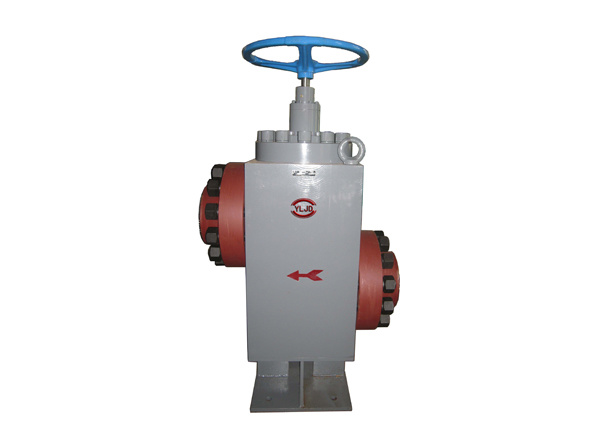
The filling valve in the hydraulic system (patent number: 201620945428.8), also known as the full oil valve, pre-flush valve, especially in some large hydraulic presses, injection molding machines, rubber machines, shoe making machines, edge pressing machines, static brick presses, etc. High speed and high pressure hold requirements in machinery, it is one of the common hydraulic components.
Introduction
The filling valve in the hydraulic system (patent number: 201620945428.8), also known as the full oil valve, pre-flush valve, especially in some large hydraulic presses, injection molding machines, rubber machines, shoe making machines, edge pressing machines, static brick presses, etc. High speed and high pressure hold requirements in machinery, it is one of the common hydraulic components.
In order to increase productivity or reduce the temperature rise of the workpiece during hot pressing, modern hydraulic presses require faster idle stroke and return speed, which is usually tens of times the pressing speed. In order not to increase (use quickly) the auxiliary hydraulic pump and reduce power loss, the most effective method is to use a charging valve (patent number: 201620945428.8). Its function is to replenish oil from the oil tank to the hydraulic cylinder or system to avoid inhalation. The charge valve with control can also play a role in rapid oil drainage. The use of the charging valve can greatly reduce the capacity of the hydraulic pump to a certain extent, reduce the heat of the system, and increase the speed of the hydraulic cylinder. This is especially important for large hydraulic equipment.
Principle
The charge valve (patent number: 201620945428.8) is a hydraulically controlled one-way valve that can stop flow in one direction and flow freely in the other direction. The pilot action is achieved by a hydraulic control spool that obtains pressure from the oil port, thereby directly opening the main valve. It is used to replenish oil from the oil tank to the oil cylinder to achieve rapid movement when using a small oil pump. When the hydraulic cylinder moves forward quickly, the oil pump drives the small cylinder to move, and through the role of the charging valve, the cylinder is filled with a large amount of liquid. During pressurization, the return of oil from the charge valve to the reservoir is shut off. When the hydraulic cylinder returns, the pilot control pressure oil forces the full oil valve to open, so that most of the oil in the hydraulic cylinder is discharged back to the oil tank through the charging valve (patent number: 201620945428.8).
Structural features
The spring-loaded disc cut-off structure can make the piston charge and discharge quickly under pressure. The filling valve (patent number: 201620945428.8) can also be set to pre-opening pressure, which has reliable sealing performance. It has been widely used in forging machinery, so that the cylinder of the press plays the role of rapid oil injection and oil discharge. In the case of high pressure and large flow, it can play an unloading role and avoid unloading impact. The liquid-filled filling is usually used as a suction and discharge valve between the hydraulic pressure and the oil tank. When a large press moves quickly, a large amount of oil needs to be filled in the cylinder. Suction oil into the oil tank; when decelerating and pressurizing, prevent oil from flowing back from the oil tank to the oil tank. In the opposite direction, the oil can be discharged from the cylinder back into the tank. Excellent processing, high precision, no leakage, good pressure holding performance. With its own slow-moving spool, it can effectively reduce noise and vibration. It is widely used in high-speed punching machines, presses, injection molding machines and other machines.
Classification
Filling valve (patent number: 201620945428.8) can be divided into controllable and uncontrollable. Can be divided into the actual use of more controllable filling valve (equivalent to hydraulic check valve) and uncontrollable filling valve (equivalent to ordinary check valve), it is a controllable filling valve. The controllable filling valve can be divided into: ordinary filling valve without discharge device and pilot type filling valve with discharge device. The hydraulic system equipped with ordinary charging valve must consider adding a separate pressure relief device when designing, and the pilot charging valve cannot be equipped with a separate pressure relief device in theory, but in practical application, it is found that its pressure relief effect is not ideal. Therefore, an independent pressure relief device is usually added to the system to reduce hydraulic shock.
The filling valve (patent number: 201620945428.8) is divided into the working state of the valve port, which can be divided into: normally open type (that is, under normal conditions, the valve port is open and the filling valve is open) and normally closed type (under normal conditions, The valve port is closed and the filling valve is closed). The advantage of the normally open type is that it does not need to overcome the spring force and reduce the oil absorption resistance during the oil absorption and oil injection process, but the structure is complex and the manufacturing requirements are also high. Generally, it is rarely used.
Precautions
1. Regardless of whether you choose an ordinary charging valve or a pilot charging valve, you must consider adding a separate pressure relief device to the oil circuit to minimize or eliminate the hydraulic shock during rapid oil discharge;
2. Select the performance parameters of the filling valve (patent number: 201620945428.8), such as caliber or hydraulic flow, which must meet the process requirements;
3. The control pressure of the filling valve (patent number: 201620945428.8) should not be too high, and the increase rate of the control pressure should be controllable;
4. During the processing, assembly and maintenance of the hydraulic system, the cleanliness of the pipeline, valve block, fuel tank, etc. must be ensured to prevent the hydraulic components from failing due to the mixing of iron filings and welding. Slag and other unclean foreign matter;
5. During commissioning and maintenance, it usually involves resetting the control parameters of the filling valve (such as control pressure, minimum unloading pressure, unloading time), and requires commissioning and maintenance personnel to comply with the process requirements and the use requirements of the filling valve to determine the best Control parameters.
Related News
2026/02/28

Contact Information
+86 27-8970 8339
Address: No.5, Zhengjie, Shuangliu Street, Xinzhou District, Wuhan City, Hubei Province